











How Exercise Supports Heart Health
For many of us, staying independent is everything. Being able to have an active lifestyle, travel, play with the kids or grandkids, or just move through daily life with confidence. But when a heart condition enters the picture, that freedom can suddenly feel uncertain.
Heart disease, stroke and vascular conditions affect more people than you may think. In fact in 2022, 1.3 million Australians were recorded living with a condition of this nature. This included everything from irregular heart rhythms to heart attacks and even strokes.
And while everyone’s experience is different, many people notice similar challenges – getting breathless more easily, feeling fatigued, experiencing chest discomfort, or losing confidence in their body. Over time, this can lead to moving less, avoiding activity, and feeling limitations to live the life you enjoy.
The good news? Movement – done safely and correctly, can be one of the most powerful tools for protecting your heart and your independence.
Why movement is important to heart health
Research has found that physical activity levels drop long before a heart condition is diagnosed – some research has found up to 12 years before, highlighting the connection between living a sedentary lifestyle and increased risk of heart conditions.
Research also consistently shows that even small increases in physical activity can make a meaningful difference. Even just a small increase in physical activity can result in a 30% decrease in risk of heart conditions and diseases.
Moving more helps:
- Your heart work more efficiently delivering blood (and oxygen) around your body
- Improves how efficiently your heart and muscles work together
- Reduce the risk of future heart problems
- Improve stamina and energy levels
- Reduce feelings of fatigue and breathlessness
- Supports healthy blood pressure and cholesterol
Exercise isn’t about pushing harder or doing “intense” workouts. It’s about the right type of movement, at the right level, for your body.
Is it safe to exercise when you have a heart condition?
Yes – when it’s prescribed and guided properly.
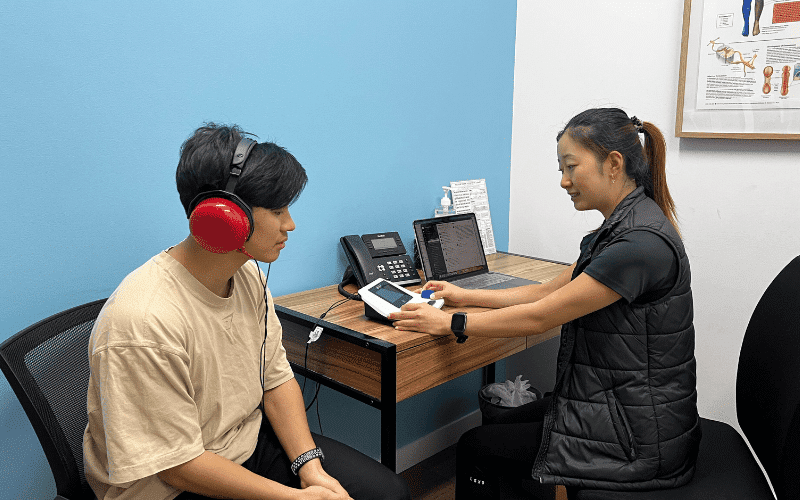
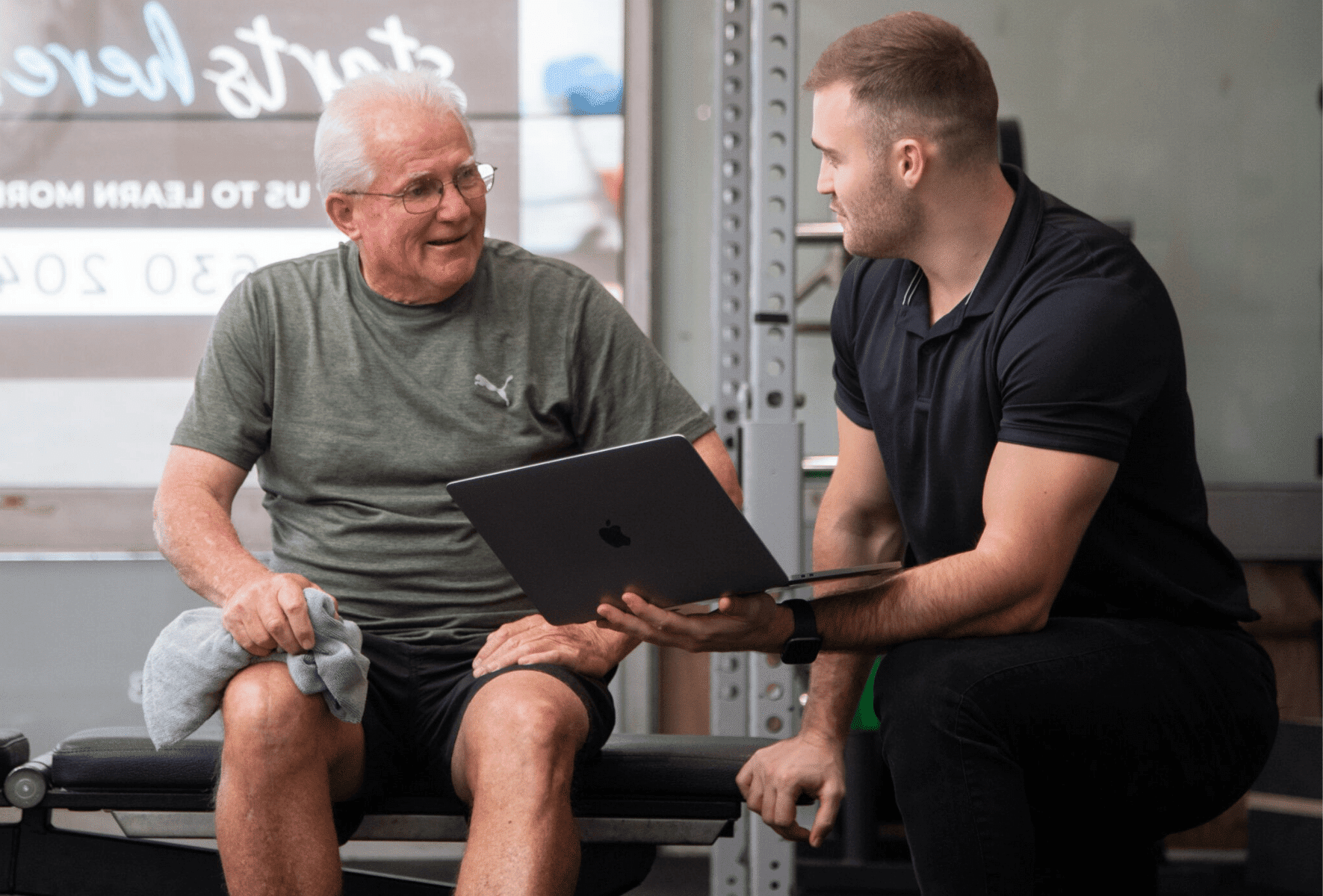
At Hiya Health, our Accredited Exercise Physiologists work with people living with heart conditions, as well as those looking to reduce their risk. Your exercise program is individually designed to suit:
- Your medical history and current condition
- Any symptoms you experience
- Your confidence levels
- Your goals
Exercise can help your heart become more efficient, improve muscle strength, and increase your tolerance for everyday activities – all while being closely monitored and adjusted as needed.
What does heart-healthy exercise look like?
There’s no one-size-fits-all approach. For many people, heart-supportive exercise includes a mix of aerobic activity (like walking, cycling or swimming) and strength-based exercise which supports muscles, joints and overall function.
National guidelines recommend around 150 minutes of moderate activity each week, plus 1–2 strength sessions. But where you start, and how you progress depends entirely on you – and our experienced Exercise Physiologists meet you exactly where you are at.
Rebuilding confidence in your body
One of the biggest benefits we see isn’t just physical – it’s confidence.
As people start moving safely and notice improvements in how they feel, fear often gives way to trust in their body again. Everyday tasks feel easier. Energy improves. Independence grows.
And that’s what this is really about – helping you keep doing the things that matter most to you.
How Hiya Health can help those with heart conditions
At Hiya Health, our Exercise Physiology services focus on supporting your heart health through:
- Individualised exercise programs
- Ongoing guidance and progression
- Clear communication with your broader healthcare team when needed
- A supportive, judgement-free environment
Whether you’re managing a heart condition, recovering after a cardiac event, or looking to be proactive about your heart health, we’re here to help you move forward with confidence.
Ready to get started?
Book an appointment or reach out to the Hiya Health team to learn how exercise physiology can support your heart, and your life, long term.
Author: Matthew Norris, Exercise Physiologist – Hiya Health Beenleigh

References:
Australian Institute of Health and Welfare. (2023). Heart, stroke and vascular disease: Australian facts, all heart, stroke and vascular disease. Australian Institute of Health and Welfare. https://www.aihw.gov.au/reports/heart-stroke-vascular-diseases/hsvd-facts/contents/disease-types
Gerber, Y., Pettee Gabriel, K., Jacobs, D. R., Brown, N. I., Reis, J. P., Shearer, J. J., Lewis, C. E., Carnethon, M. R., Sidney, S., & Roger, V. L. (2025). Trajectories of Physical Activity Before and After Cardiovascular Disease Events in CARDIA Participants. JAMA Cardiology, e252282. https://doi.org/10.1001/jamacardio.2025.2282
Javier Loureiro Diaz, Praveen Jayaprabha Surendran, Jacob, P., Salma Chbib, Liam David Foster, Ahmad, M., & Ibrahim, O. (2024). Peak Exercise Capacity and Angina Threshold Improvement after Cardiac Rehabilitation in a Patient with Stable Angina and Low Hemoglobin. Heart Views, 25(1), 21–29. https://doi.org/10.4103/heartviews.heartviews_27_23
Nystoriak, M. A., & Bhatnagar, A. (2018). Cardiovascular Effects and Benefits of Exercise. Frontiers in Cardiovascular Medicine, 5(135). National Library of Medicine. https://doi.org/10.3389/fcvm.2018.00135
Ramakrishnan, R., Doherty, A., Smith-Byrne, K., Rahimi, K., Bennett, D., Woodward, M., Walmsley, R., & Dwyer, T. (2021). Accelerometer measured physical activity and the incidence of cardiovascular disease: Evidence from the UK Biobank cohort study. PLOS Medicine, 18(1), e1003487. https://doi.org/10.1371/journal.pmed.1003487

Subscribe to e-news
Receive the latest health tips and news straight to your inbox


